
What is the Waterfall Approach? 💧
The Waterfall approach is a traditional project management methodology where each phase of a project must be completed before the next phase begins. It’s like following a strict sequence of steps, where you plan everything upfront and execute it sequentially. Think of it as a flowing waterfall that moves in one direction, with each stage cascading into the next. 🌊
Phases of the Waterfall Approach ⏳
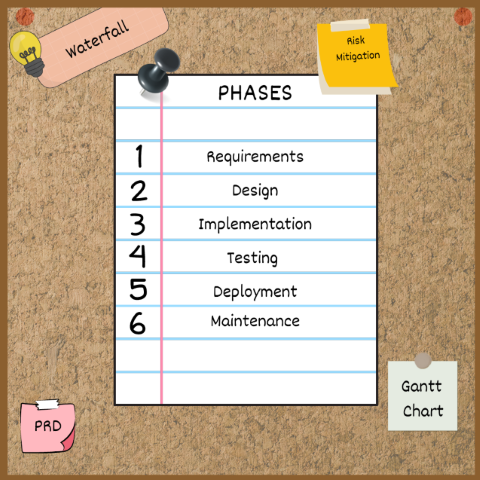
The Waterfall methodology is broken down into distinct phases, each of which must be completed before the next one begins. This linear process ensures that each step flows logically into the next. Here's an overview of the main phases:
- Requirements Gathering and Analysis: In this initial phase, all project requirements are collected from stakeholders. The goal is to understand exactly what needs to be delivered, ensuring there is clarity before any work begins.
- System Design: Once the requirements are clear, the next step is designing the solution. This includes creating system architecture, process flows, and technical specifications to guide the development process.
- Implementation: The project’s development or construction begins in this phase. Teams work on building the product based on the design documents. This could be software coding, manufacturing, or organizing resources depending on the industry.
- Testing: After the product has been built, it undergoes testing to ensure it meets the original requirements. Testing is crucial to identify and fix any defects or issues before deployment.
- Deployment: In this phase, the product or system is delivered to the client or made available for use. It may involve installing the product, training users, or making it live in a production environment.
- Maintenance: Once the product is in use, ongoing maintenance is required to address issues, make updates, or improve functionality based on user feedback. This phase ensures the project continues to meet its objectives over time.
By following these sequential phases, the Waterfall methodology ensures that each step is completed with thorough documentation and planning before moving on to the next stage.
Pros of the Waterfall Approach 🚀
- Clear Structure: The Waterfall model offers a clear and structured approach to project management, making it easy to understand and follow. 📋
- Defined Milestones: With distinct phases and milestones, it's easier to track progress and manage deadlines. 🗓️
- Easy to Manage: Due to its sequential nature, managing the project becomes more straightforward, with less complexity. 🛠️
- Documentation: Extensive documentation is created at each phase, providing a comprehensive record of the project. 📚
Cons of the Waterfall Approach ⏳
- Inflexibility: Once a phase is completed, it's challenging to go back and make changes without impacting the entire project. 🚫
- Late Testing: Testing occurs late in the project, which can lead to the discovery of issues when they are more costly to fix. 🧪
- Assumes Requirements are Stable: The approach assumes that requirements are clear and unchanging, which might not be the case in dynamic environments. 🔄
- Risk of Project Failure: If there’s a mistake or a missed requirement early on, it can jeopardize the entire project. ⚠️
Best Suited Industries 🏗️
- Construction: With well-defined stages and dependencies, construction projects benefit from the structured approach.
- Manufacturing: Ideal for manufacturing projects where processes are sequential and highly structured.
- Healthcare: Useful in healthcare for projects like medical device development, where detailed planning is crucial.
- Government Projects: Suited for government projects with clear regulations and fixed requirements.
Fun Fact 🎉
Did you know the Waterfall model was first introduced in 1970 by Dr. Winston W. Royce? Despite being over 50 years old, it remains a foundational concept in project management! 🕰️
Join the Conversation 💬
What are your thoughts on the Waterfall approach? Have you used it in your projects? Share your experiences and let’s discuss the pros and cons together! 🤔💭